In & Out: First & Last Screen Appearances of 25 Stars
Seeing the beginning and the end informs the middle

October 8, 2025
Years ago, when I first started this project — which hoped to gather a number of juxtaposed images showing various celebrities’ first and last filmed acting performances — I thought it would be easy. I was wrong. While it’s easier for some of the most iconic names since so much research exists regarding their early years, I encountered time-sucking troubles, and not only when it came to old-timers (whose first films, as you might expect, were often lost silents).
Along with that challenge, I found that many stars’ first appearances were as uncredited extras (therefore hard to ID) in obscure movies (therefore hard to find in any form), and that those whose early-years films I found easily might well have ended their careers in similarly obscure straight-to-video releases or in episodic TV, much of which is not floating around on the Internet.
But I pushed ahead and cooked up 25, to which I’ve just added Linda Lavin — but hers is incomplete.
I wanted the group to be fairly random, and I think it is. It’s less about icons and more about just seeing the changes of life and of career. It’s fascinating to me how difficult it is — in all but a few cases — to guess what heights a career may have hit when only viewing its genesis and its conclusion.
LINDA LAVIN
Doctors and Nurses (1963) & Mid-Century Modern (2025)
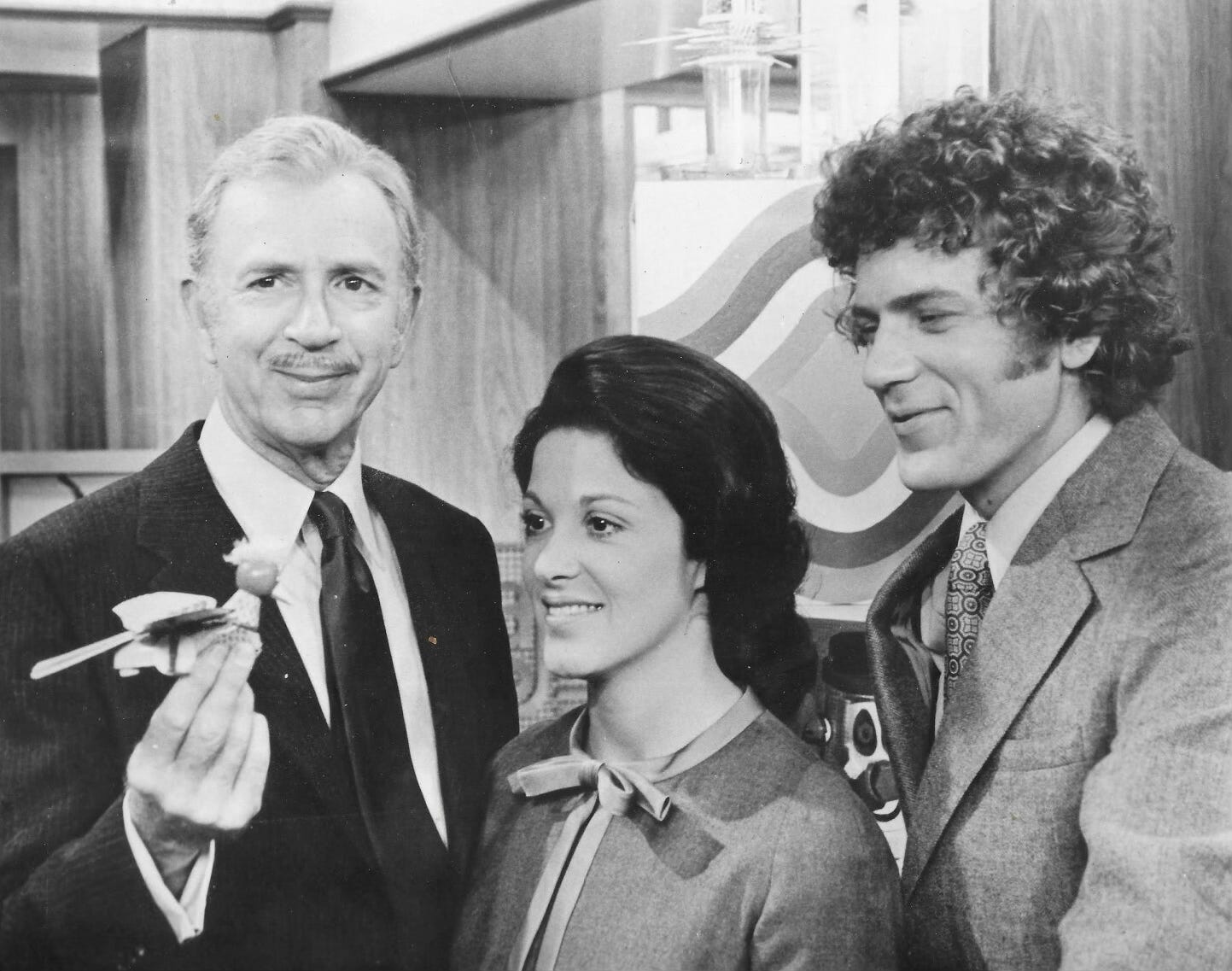
When Linda Lavin (1937-2024) died in December — it was a measure of how beloved she was that 87 felt too soon — it was reported she had filmed scenes for the series Mid-Century Modern days before feeling ill and being rushed to a hospital, only to die by her husband’s side while en route.
Now canceled after just a season, Mid-Century Modern would be her last-ever TV appearance. The March 28, 2025, episode “Sour Pickleball,” in which her character Sybil has a sweet romance with an old friend (Judd Hirsh, who was 89 at the time of filming), wound up being the last we saw of Lavin on TV, although an episode of Criminal Minds filmed before that aired later.
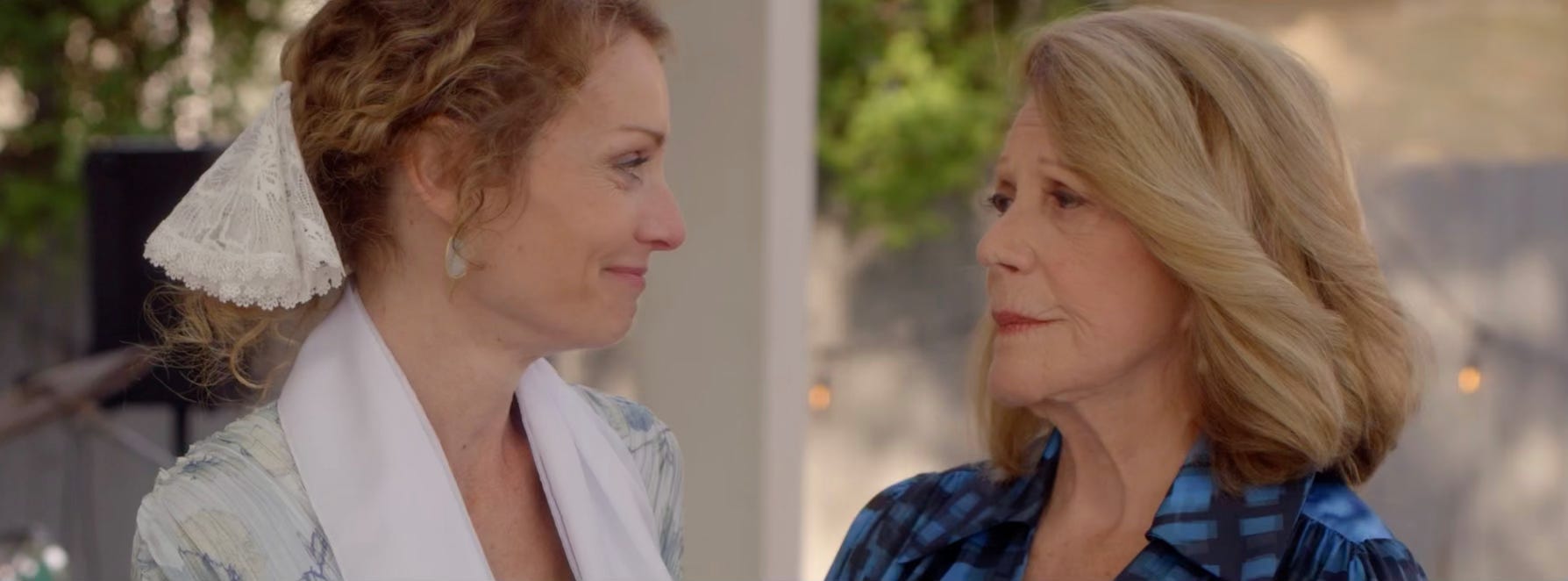
By the way, Lavin’s last feature film is 2025’s One Big Happy Family. Written by and starring Lisa Brenner, and direced by Matt Sohn, it’s a charming story of a Jewish woman (Brenner) discovering her biological father was not who she thought he was, and wasn’t even Jewish. Set around the build-up to her daughter’s bat mitzvah, the story involves Lavin as her well-meaning, slightly overbearing mom, who is one part rebel (she gets a tattoo, burial rules be damned) and one part that mom (“I love you, Mom!” “I love you more”).
The film, in theaters now, gives Lavin a chance, as did Mid-Century Modern, to showcase what she did best — effortless comedy with unexpected drama.
The reason I’m including Lavin on my list is to see if anyone has access to imagery showing her debut — she appeared on an episode of Doctors and Nurses in 1963 — I would love to add that.
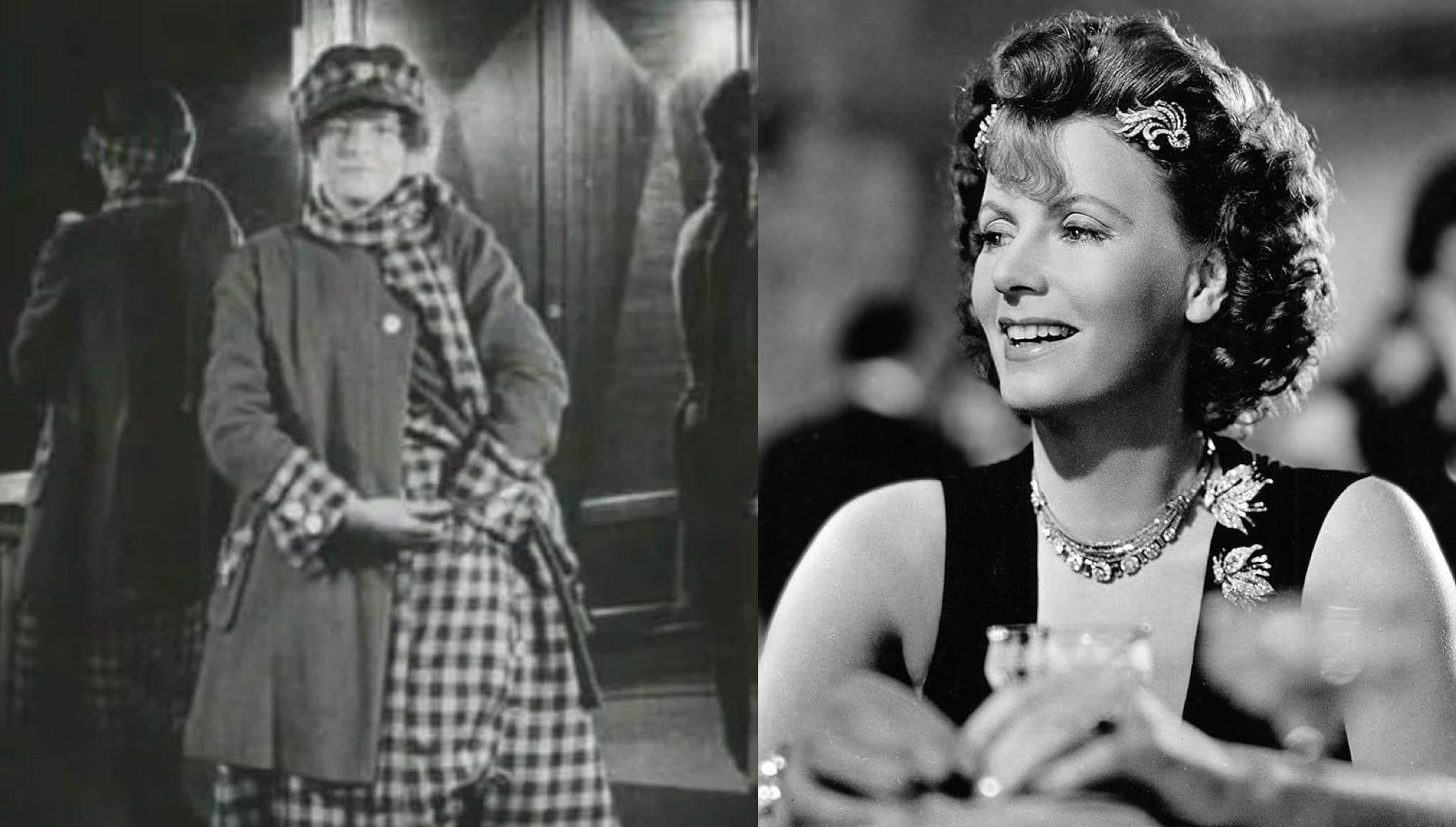
GRETA GARBO
How Not to Dress (1920) & Two-Faced Woman (1941)
Greta Garbo (1905-1990) is one of Hollywood’s most indelible performers, one who earned a spot on AFI’s List of 25 Greatest Screen-Legend Actresses (with careers that started prior to 1950). Is she a household name today? I fear not, but among performers of her era, hers is one of the most famous names.
 Tiktok failed to load.
Enable 3rd party cookies or use another browser
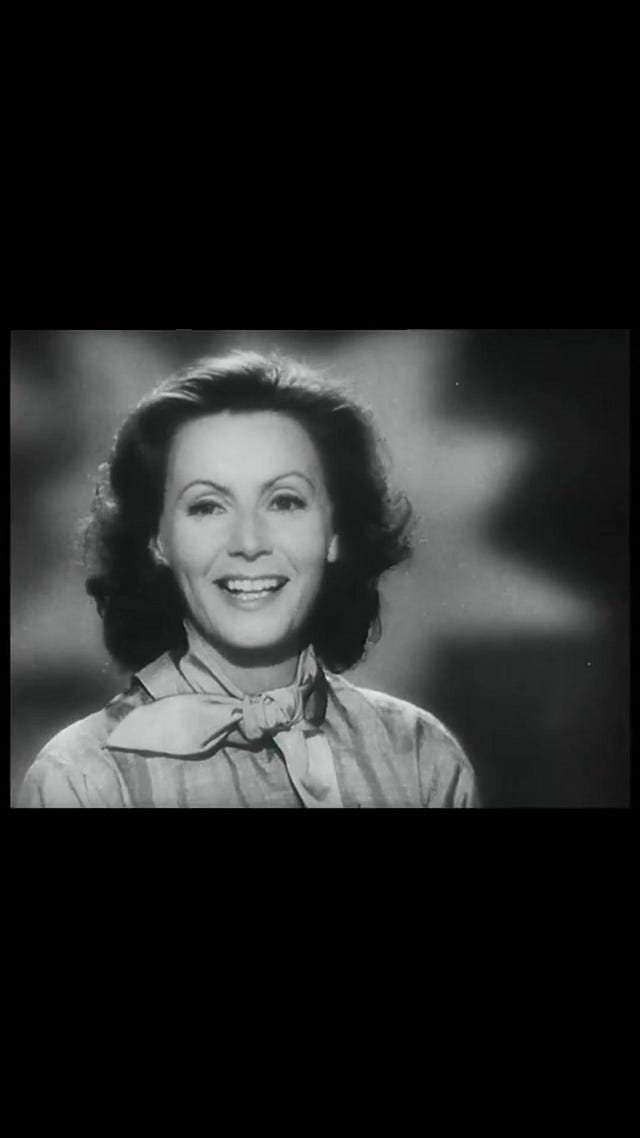
The mercurial actor’s first film was … for a department store. Prior to TV ads, some businesses made short films to promote their brands. In her case, Greta’s was made to instruct viewers on how not to dress. It was the original What Not to Wear! Ironically, she would become a style icon before her final film, a comedy, led to embarrassing reviews and a not-quite-intentional retirement.
VAN JOHNSON
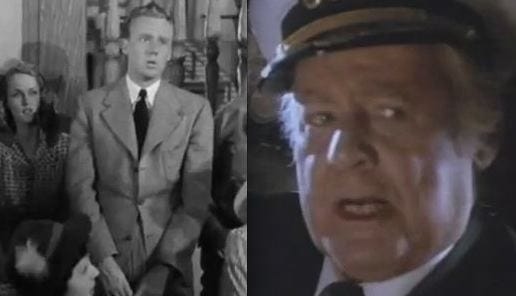
Too Many Girls (1940) & Three Days to a Kill (1992)
From an uncredited spot in the chorus of a Lucy & Desi musical called Too Many Girls, Van Johnson (1916-2008) ended his time on the silver screen as a crusty commander in a Fred Williamson action groaner alongside Chuck Connors. That was also the final performance for Connors. Those two had more in common than just their final movie!
LIZABETH SCOTT
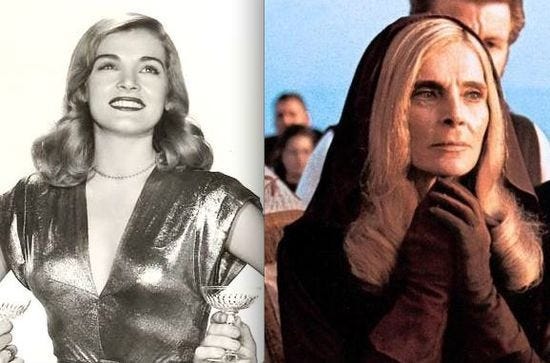
You Came Along (1945) & Pulp (1972)
Thanks to her close association with producer Hal Wallis, Lizabeth Scott (1922-2015), an even sultrier version of Lauren Bacall, was the star of the very first film she did. She sued Confidential Magazine for outing her and by 1972 was making her final appearance, opposite Michael Caine, in a film about an old-time movie star (Mickey Rooney) who hires a pulp-fiction writer to do his memoirs. In that role, Scott’s character is told, “I’ll bet that was a fairy-tale romance,” to which she says, “On the contrary, the prince was very hetero.” Rumors suggest Scott wasn’t. Very, I mean.
RAY MILLAND
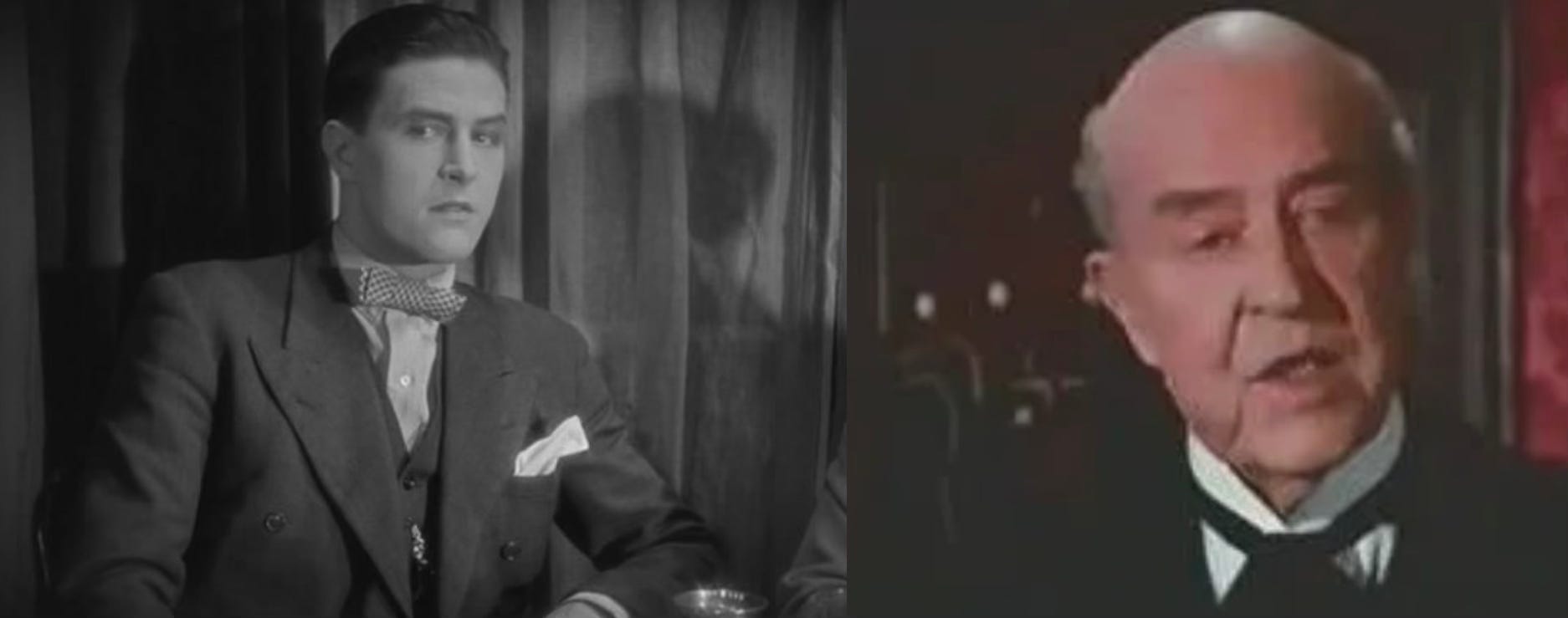
The Flying Scotsman (1929) & Sherlock Holmes and the Masks of Death (1984)
Old Hollywood legend Ray Milland’s (1905-1986) first role was a lead in a British part-silent/part-talkie, starring as a fireman aboard a train who falls for the engineer’s daughter, running afoul of the fireman he replaced. His last was as the Home Secretary in a made-for-TV Sherlock Holmes installment starring fellow old-timers Peter Cushing and Sir John Mills.
DOROTHY STRATTEN
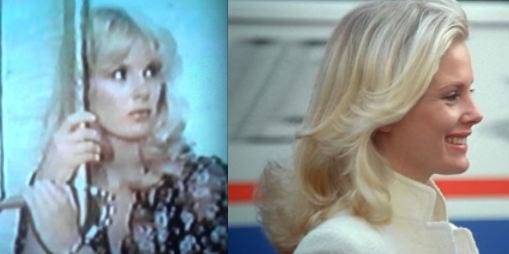
Autumn Born (1979) & They All Laughed (1981)
One of the most infamous (for reasons beyond her control) Playboy bunnies of all time, Dorothy Stratten (1960-1980) kicked things off with a seedy nudie flick and kicked off right after filming her lover Peter Bogdanovich’s screwball comedy starring Audrey Hepburn and John Ritter.
Pretty incredible to consider that her entire film career lasted only a couple of years, yet she’s still so fondly remembered and inspired quite a few works of art about her life. Just a year and a couple of months after her murder, Stratten was portrayed by Jamie Lee Curtis in Death of a Centerfold: The Dorothy Stratten Story (1981), then in 1983 was played by Mariel Hemingway in Star 80.
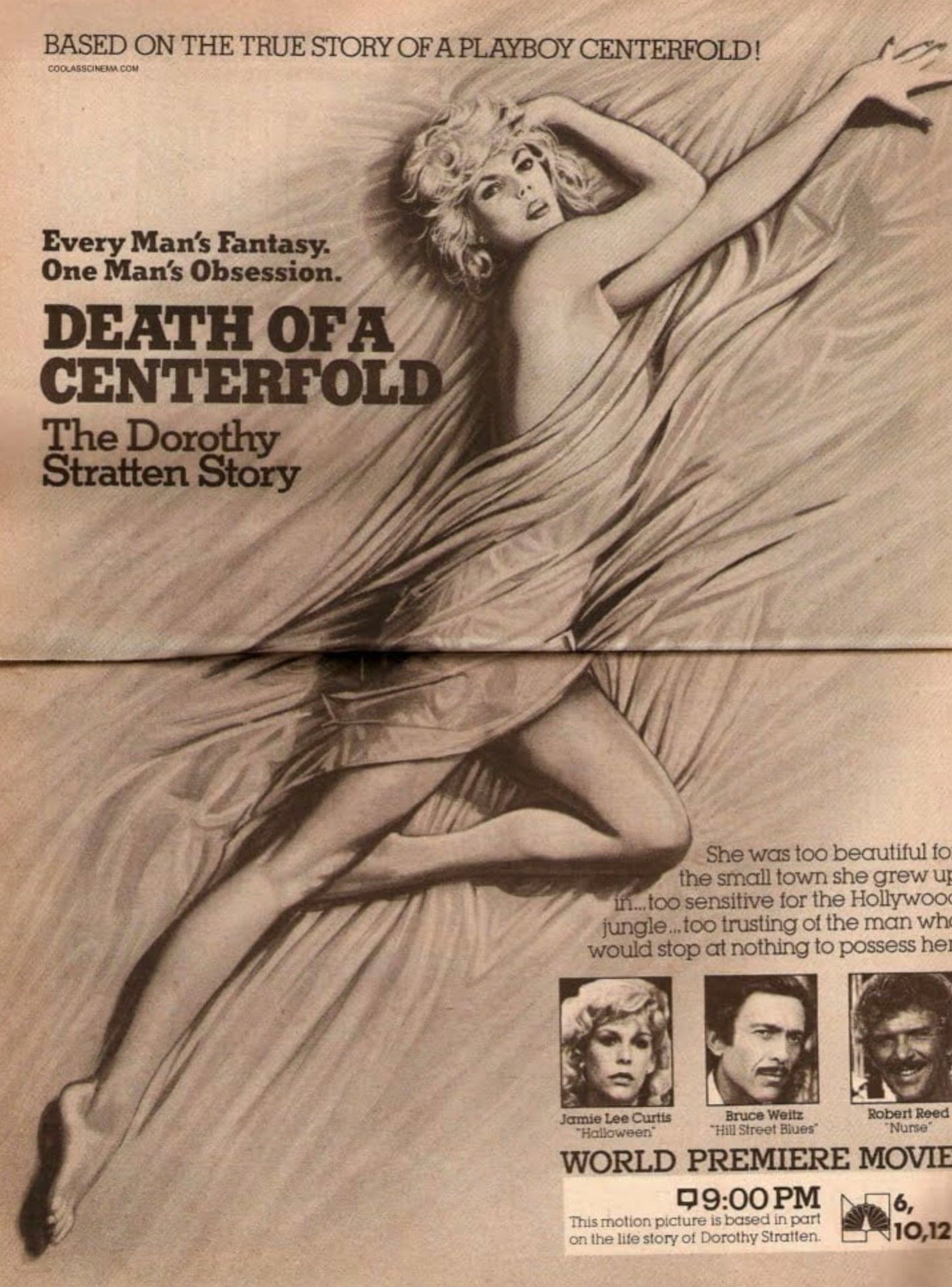
More recently, Dorothy was briefly portrayed in the Hulu miniseries Welcome to Chippendales (2022), this time by Nicola Peltz.
ELVIS PRESLEY
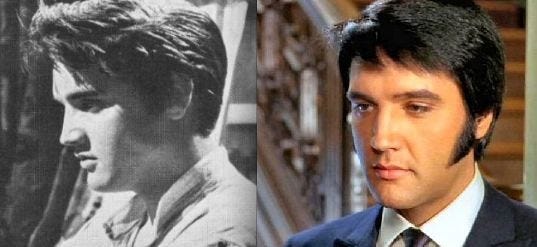
Love Me Tender (1956) & Change of Habit (1969)
The King (1935-1977) was already an overnight sensation as a musician, so became an obvious choice to start at the top — as a leading man — in his film debut. Unlike most others with successful acting careers, he never played a supporting role.
In his final performance, he stretched a bit, playing a doctor who romances a nun on the run played by Mary Tyler Moore.
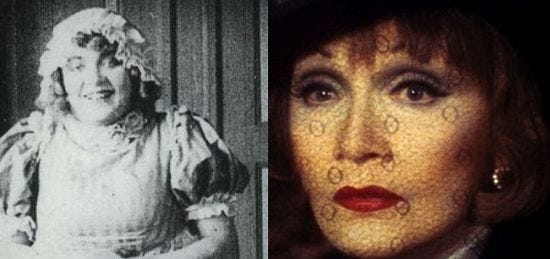
MARLENE DIETRICH
The Little Napoleon (1923) & Just a Gigolo (1978)
The legendary, lovely Marlene Dietrich (1901-1992) referred to herself as “a potato with hair” in her first role and tried to forget it existed. This was not self-deprecating, it was clear-eyed self-assessment from a broad who, in her dying days, scrawled “How Ugly Can You Get?” on a photo of Meryl Streep.
Her last performance was as a wobbly chanteuse in a David Bowie movie, a cameo made for badly needed cash — her days as a touring artist were over, thanks to a bad fall. Her daughter Maria Riva wrote that Just a Gigolo was, for Dietrich, “the last film that she should not have had to make” and revealed that her costume and mask-like makeup made her look “like a female impersonator doing a rather tacky take-off on Dietrich.”
There, I will agree to disagree with Riva, who turned 100 last December. It’s a forgettable film, but Dietrich’s cameo strikes me as poignant. I have to think Dietrich would like that — even gussied up — she was able to maintain a smidgen of her illusory glamour, even when she was in such poor health. (Not that while I’m sure movie fans at the time thought of Dietrich as an impossibly antique creature, she was younger during that shoot than Dolly Parton and Cher are today.
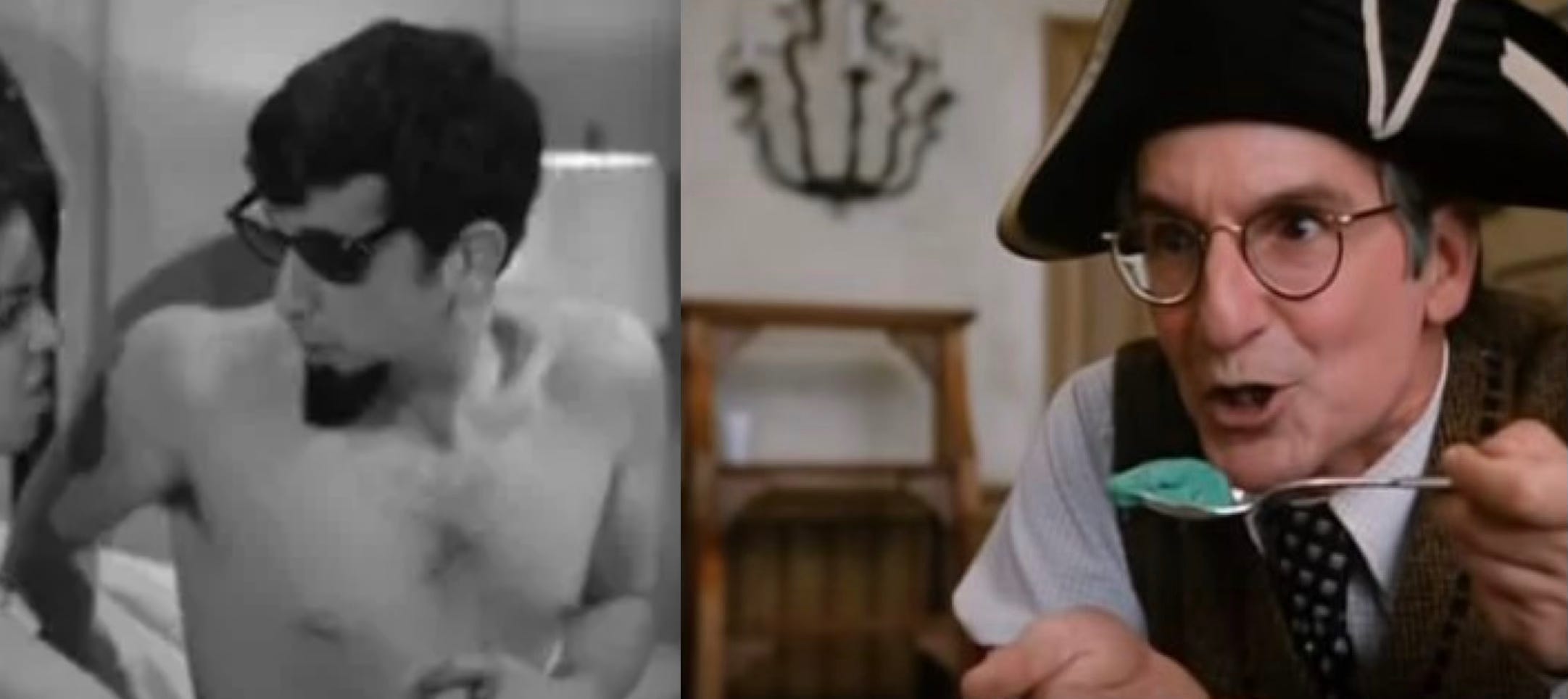
LEONARD FREY
The Fat Black Pussycat (1963) & “Bride of Boogedy,” Walt Disney’s Wonderful World of Color (1987)
Most famous for playing the so-called “pock-marked Jew fairy” named Harold in the off-Broadway (1968) and movie versions (1970) of The Boys in the Band, Tony and Oscar nominee Leonard Frey’s (1938-1988) first film was a horrific slasher pic in which he plays a beatnik slain while vomiting over a fire escape. His final (TV) movie, filmed while he was battling AIDS, was a spooky Disney flick — also meant to scare the bejesus out of its considerably younger audience.
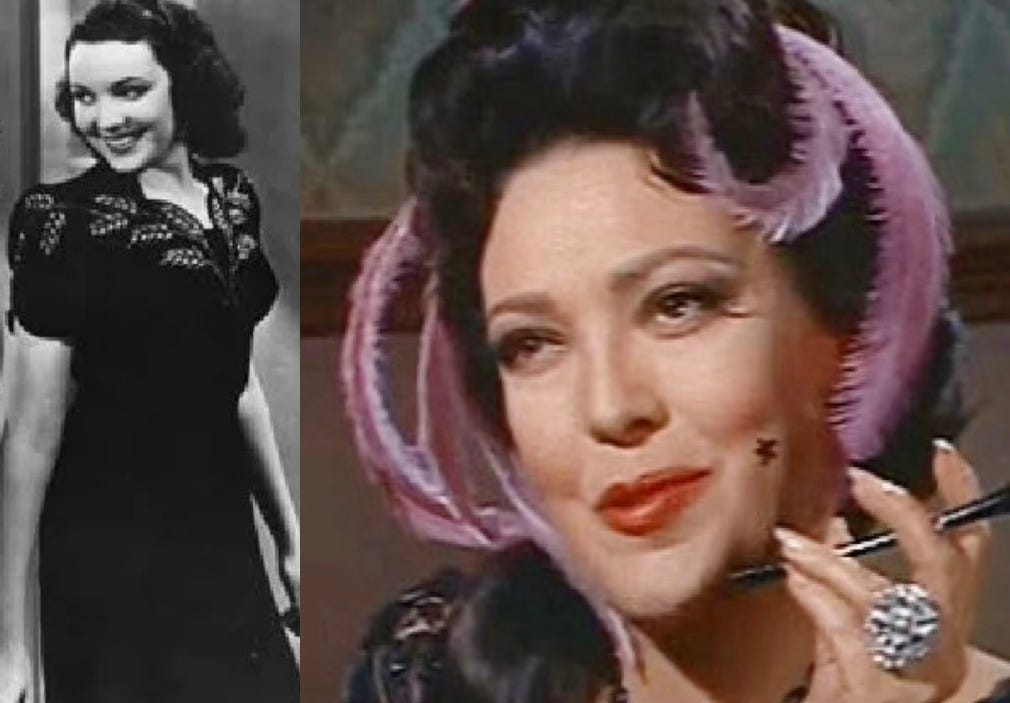
LINDA DARNELL
Hotel for Women (1939) & Black Spurs (1965)
In her debut, Linda Darnell (1923-1965) — “The Girl with the Perfect Face” — was only 16 years old and already a leading lady. In the end, she was still a dish at 41, albeit one in a cheesy, low-budget western. She died trying to flee a house fire (no cause for the blaze was ever determined) and enduring burns over 90% of her beautiful body. It’s never right when anyone dies so senselessly, but it feels deeply shocking when it happens to a nationally recognized bright light of escapism.
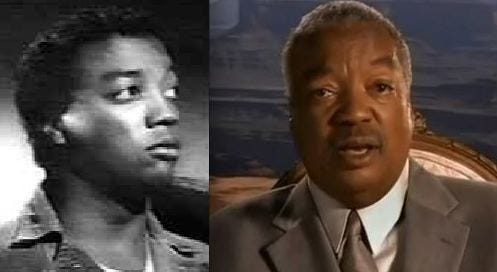
PAUL WINFIELD
“The Case of the Runaway Racer,” Perry Mason (1965) & “I Will Walk With You: Part 1,” Touched by an Angel (2003)
Super talent Paul Winfield (1939-2004) shone in film as well, was Winfield kicked things off with episodic television (in a dramatic role on a series about a God-like lawyer) and kicked off with it, too (on a series about God). In-between, he was especially well-received as Diahann Carroll’s character’s boyfriend on Julia (1968); in Sounder (1972), for which he was Oscar-nominated; and the miniseries King (1978), for which he was Emmy-nominated. He won his Emmy for Picket Fences (1995).
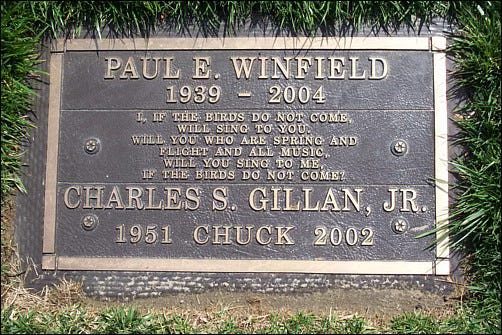
Winfield, who was gay but strictly professionally closeted, was predeceased by his partner of 30 years, Charles Gillan Jr., by about two years. Their final resting place is together.
MARILYN MONROE
Scudda Hoo! Scudda Hay! (1948) & Something’s Got to Give (1962)
Not counting a voice-only role, Marilyn Monroe’s (1926-1962) first part was canoeing in an abysmal comedy that was so poorly reviewed she lost her studio contract. No surprise, then that she fudged the truth and would later gripe that her scenes were cut out — they weren’t. They were just minuscule.
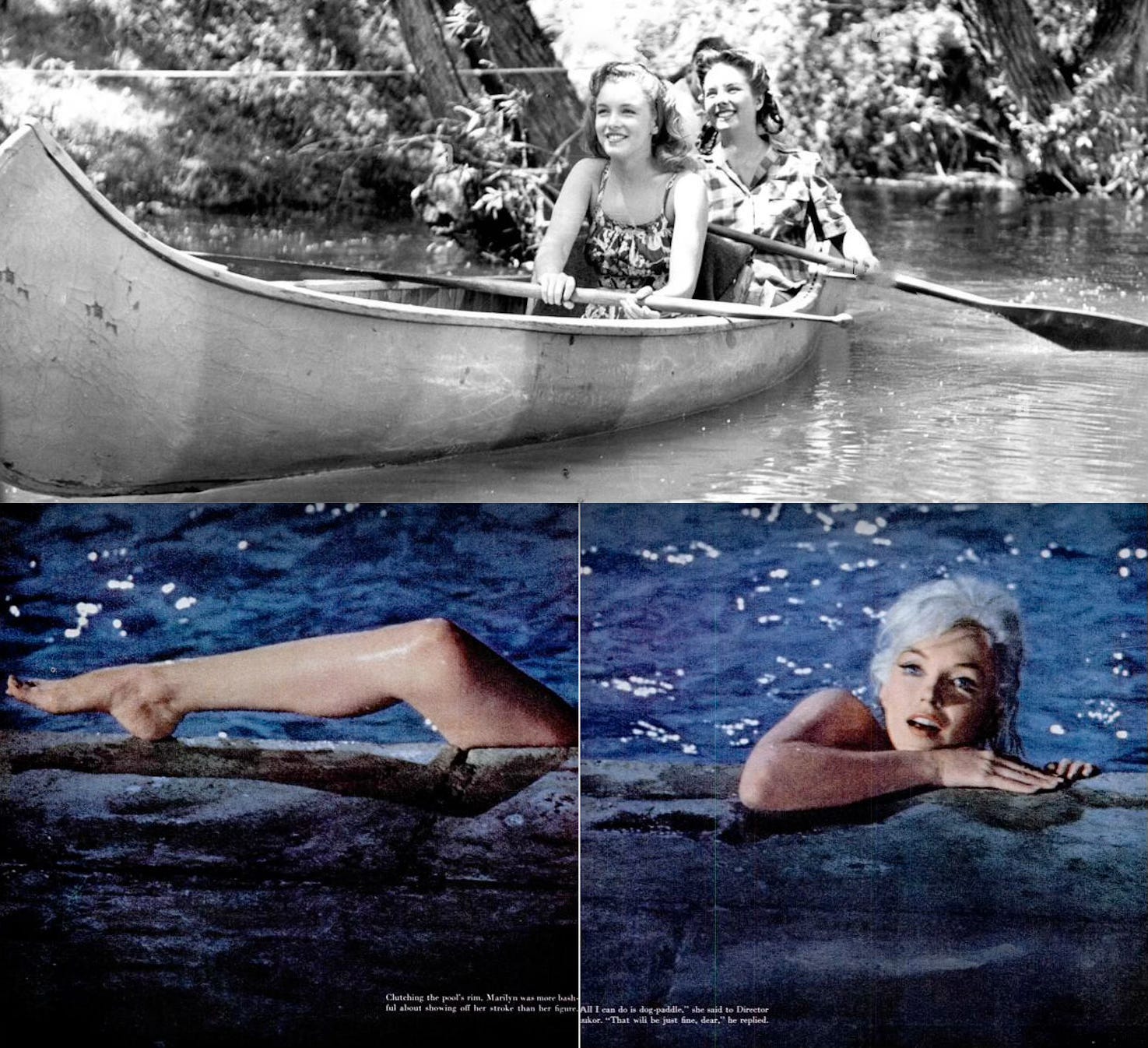
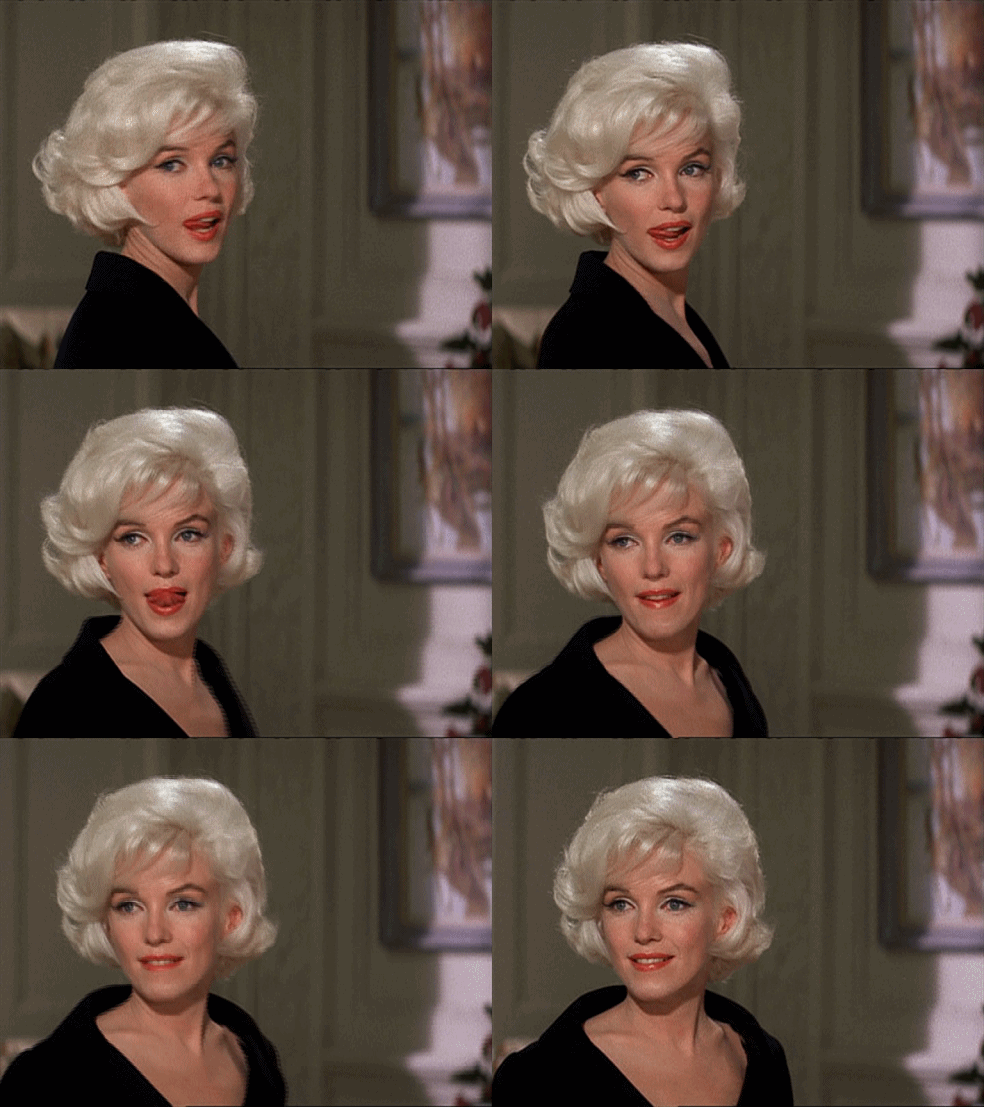
Her final gig was the year she died, looking arguably more beautiful than she ever had before in a broadly comedic remake of My Favorite Wife opposite Dean Martin that was never finished — her tardiness led to her being sacked. The surviving footage reveals a confident, dazzling performance; Something’s Got to Give was eventually made as Move Over, Darling (1963) with Doris Day stepping in for the late Monroe.
SABU
Elephant Boy (1937) & A Tiger Walks (1964)
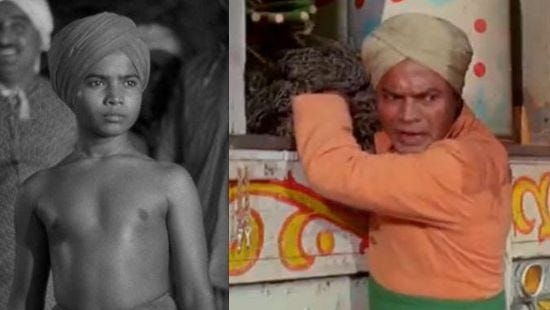
Hollywood loved Sabu (1924-1963) in that turban so much it never wanted to let him out of it. The adorable “Elephant Boy” — just 13 years old when he got his start — was later the subject of a song by John Prine called “Sabu Visits the Twin Cities Alone,” all about the culture shock the teen actor must have faced when he was first taken to the U.S. from India. He signed off in a tiger flick just before dying out of nowhere from a heart attack at 39.
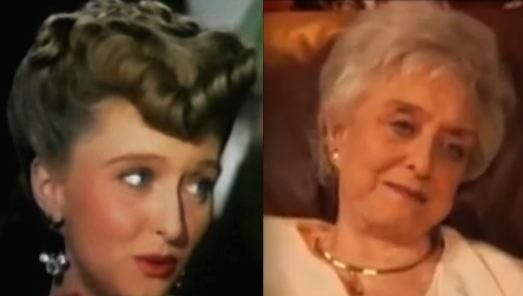
CELESTE HOLM
Three Little Girls in Blue (1946) & College Debts (2013)
Celeste Holm (1917-2012) bowed in a period piece ahead of a dizzyingly successful, prolific career that included, of course, her turn in All About Eve (1950). She was a uniquely patrician presence on film and TV.
Years after her family said she had begun to suffer memory issues, she took her final, fragile bows in an amateurish production when she was in her nineties and up to her teeth in family turmoil and money problems — at 87, she had wed a 41-year-old man, leading to a lawsuit by her offspring. At stake was her $10-million apartment at 88 Central Park West. It hit the market weeks after she died. Her sons were the primary beneficiaries, and her husband was cut in for one-third.
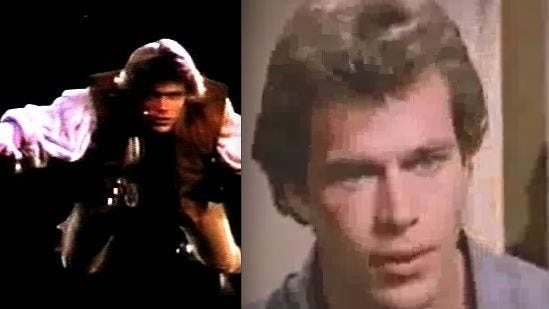
JON-ERIK HEXUM
Voyager from the Unknown (1982) & “Golden Opportunity,” Cover Up (1984)
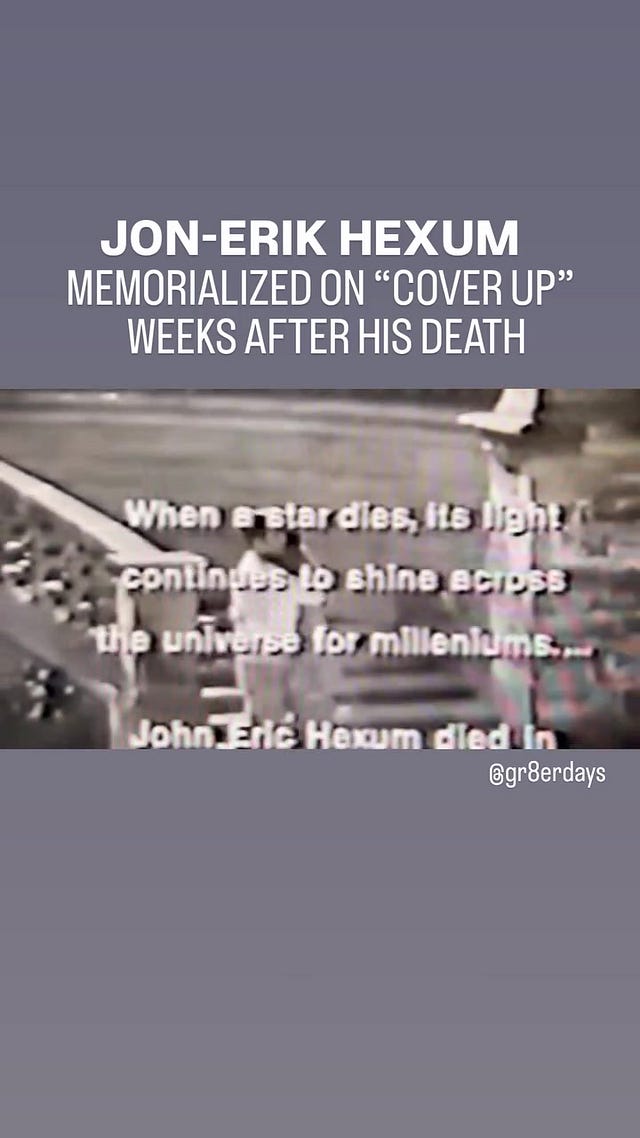
The best-lookin’ dude of all time, Jon-Erik Hexum (1957-1984) got his start flying around on a wire in a TV movie alongside Meeno Peluce, a gig that later led to a regular (if short-lived series) called Voyagers. He appeared in a relatively limited number of series and films, with his final broadcast performance coming in an episode of the series on whose set he accidentally—and fatally—shot himself in the head, Cover Up.
 Tiktok failed to load.
Enable 3rd party cookies or use another browser
Less than a month after his death, he was remembered on Cover Up, which replaced him with actor Antony Hamilton. It did not last long, and Hamilton also came to a tragic ending, dying of AIDS complications in 1995.
DORIS DAY
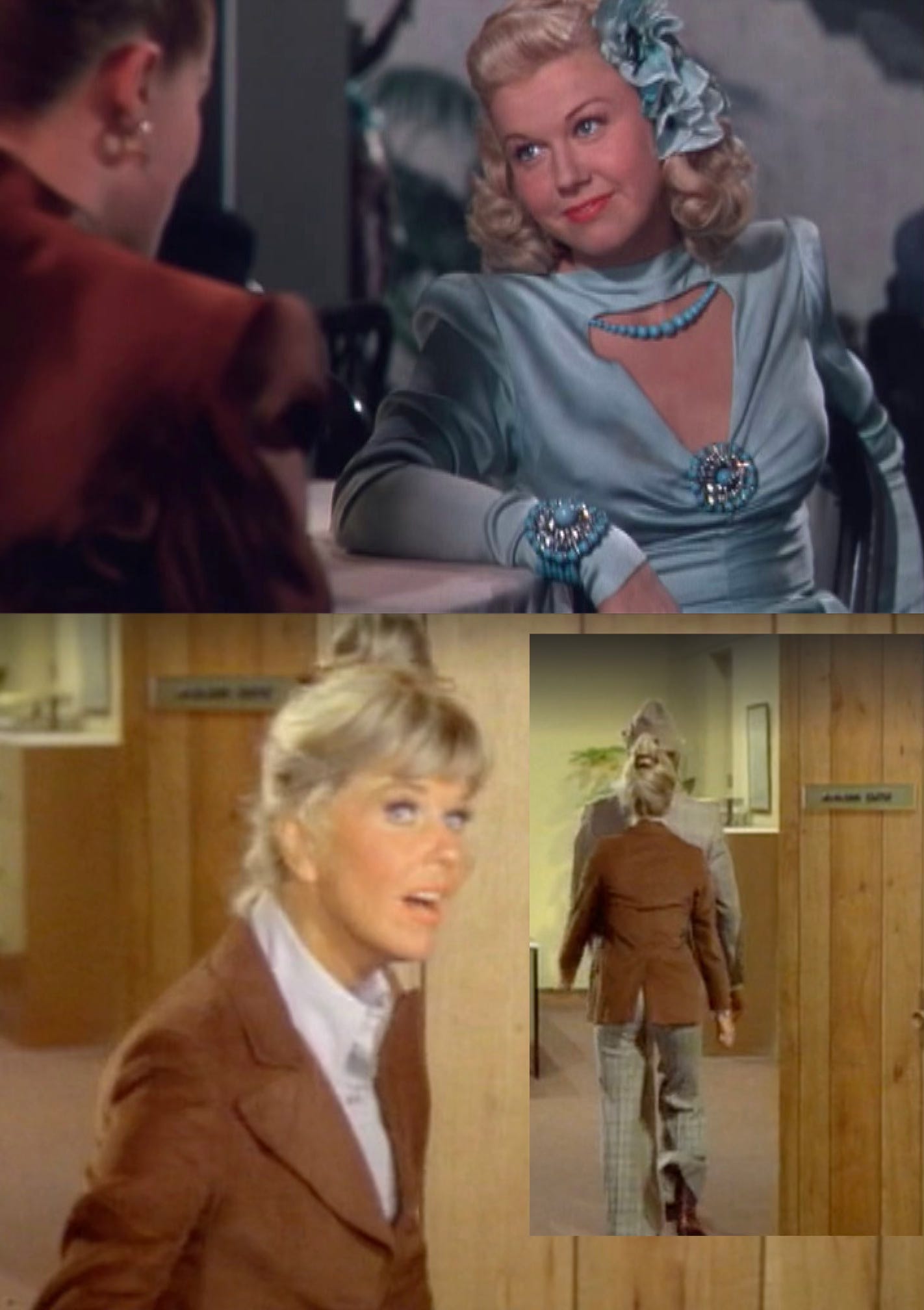
Romance on the High Seas (1948) & “Byline ... Alias Doris,” The Doris Day Show (1973)
Doris Day (1922-2019) was one of the biggest, most beloved stars the U.S. ever produced, succeeding in music, movies and — though it was against her will — on TV. Though she’d grow into a deft comedienne, Day’s first time in a movie capitalized on her creamy singing voice, via Romance on the High Seas.
Her husband Marty Melcher and his lawyer Jerome Rosenthal siphoned off all of her money, something that came to light only when Melcher croaked in 1968. Unfortunately for all involved, the odious Rosenthal lived another nearly 40 years, during which time he did his best to drag out Day’s legal action against him. She eventually settled for $6 million, a fraction of what he stole from her.
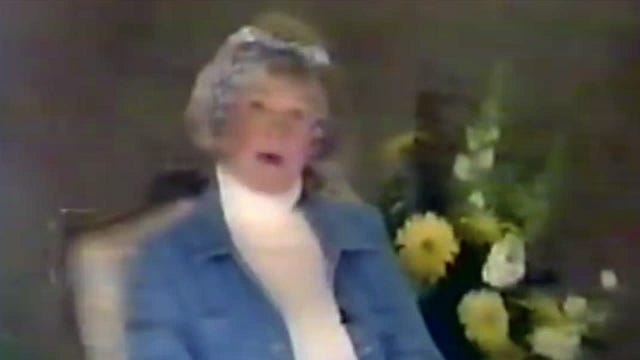
In the meantime, Day was forced to do TV, and do it she did — starring on The Doris Day Show from September 24, 1968-February 19, 1973. At the time, she was just past 50 (though in 2017, she acknowledged she was two years older than she’d previously admitted or known), but that was a wrap on Doris Day and acting.
In the images above, you can see Doris entering and exiting the last scene ever aired from her series, and therefore her final performance, presuming it was shot in sequence.
 Tiktok failed to load.
Enable 3rd party cookies or use another browser
Day continued working, hosting an animal-centric TV show and also making occasional — and rapidly dwindling — appearances. But it’s pretty incredible that she stopped acting cold nearly 50 years before she died.
FARLEY GRANGER
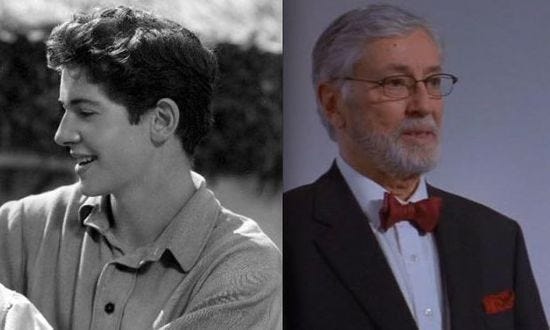
The North Star (1943) & The Next Big Thing (2001)
This memorable Hitchcock lead began his career as a veritable work of art of a boy opposite fellow fresh young thing Anne Baxter. It was the start of something big, though — as Granger recalled in his 2007 memoir Include Me Out: My Life from Goldwyn to Broadway — he never quite became the superstar he could have. He capped it off as an elderly art expert in a flick with Connie Britton.
AUDREY HEPBURN
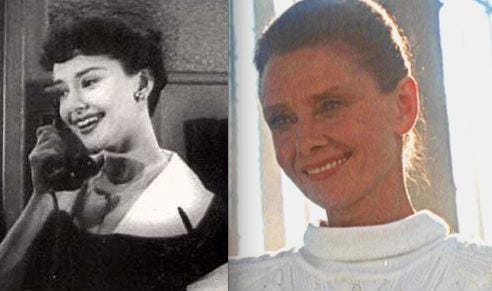
One Wild Oat (1951) & Always (1989)
One of the silver screen’s most enduringly popular leading leadies, Audrey Hepburn (1929-1993) started out as an unbilled extra in 1951. Not even two years later, she became the star du jour in Roman Holiday (1953) opposite Gregory Peck, scooping up every major award for her trouble.
Across time, Hepburn was also a fashion inspiration, and with Breakfast at Tiffany’s (1961), arguably, became something more, a pop icon. By the time of her final role, she was being directed by Steven Spielberg and playing a spiritual barber who may or may not have been God in Always, one of his lesser efforts — and her very last.
BUD ABBOTT
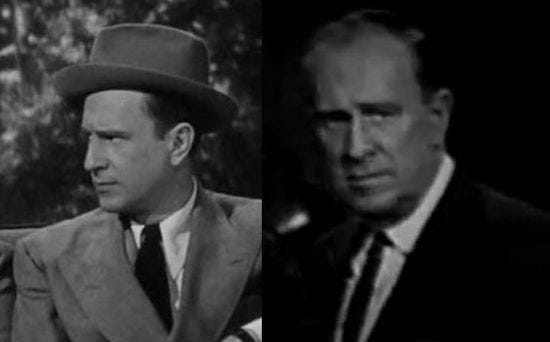
One Night in the Tropics (1940) & “The Joke’s on Me,” G.E. True Theater (1961)
The ultimate straight man, Bud Abbott (1895-1974), barely aged from his beginning, as one-half of the star power behind a comedy crafted to his and Lou Costello’s talents, to his end, as the (perfectly cast) nervous manager of an abrasive performer.
He did some off-screen voice work on a 1968 episode of the animated Abbott & Costello.
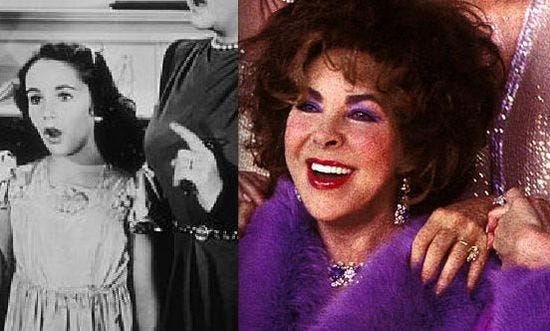
ELIZABETH TAYLOR
There’s One Born Every Minute (1942) & These Old Broads (2001)
One of history’s great screen goddesses, Elizabeth Taylor (1932-2011) was hatched as a child actress with alarmingly black-and-white (okay, they were violet, but wouldn’t be captured as such in films for some time) eyes.
It was not an auspicious debut, but hers was one of Hollywood’s greatest careers and most tumultuous lives, including two Oscars and eight marriages.
She went out in a TV movie that broadly and winningly lampooned not only her image but those of fellow luminaries Joan Collins, Debbie Reynolds and Shirley MacLaine. (A June Allyson cameo was that actress’s swan song, too.)
Point of interest: MacLaine was Madonna’s age now when she shot that TV movie.
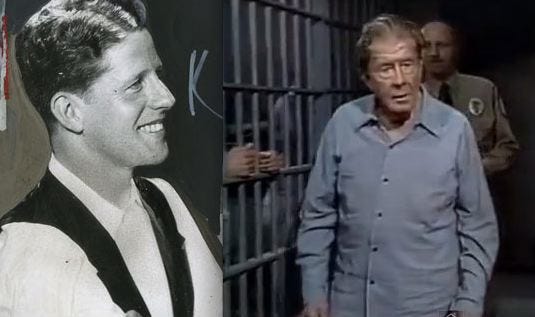
RUDY VALLEE
The Vagabond Lover (1929) & “Episode #1.106,” Santa Barbara (1984)
An incredibly successful singer largely forgotten today, Rudy Vallee (1901-1986) was emblematic of the ‘20s and ‘30s, a true icon of his era. He made his first appearance before the cameras in a starring vehicle, having already racked up countless hits and established himself as a recording star.
Very late in life, he wrapped things up with a tongue-in-cheek, typically charming cameo on a TV soap opera playing … the world’s oldest convict. That was less than two years before he died at 84.
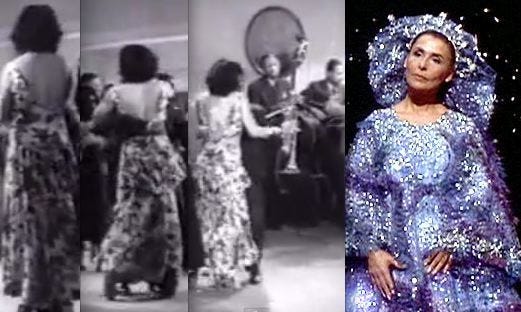
LENA HORNE
Cab Calloway’s Jitterbug Party (1935) & The Wiz (1978)
The serene beauty with the silky voice was a celebrity disruptor. Her fame challenged all the norms of what Hollywood presumed the white public would accept in a performer. She was still criminally underused in films, but at least her first appearance (she’s only seen from behind in a music short) and her last (she’s only seen from the front in a lavish, if flawed, musical) both featured knock-out dresses!
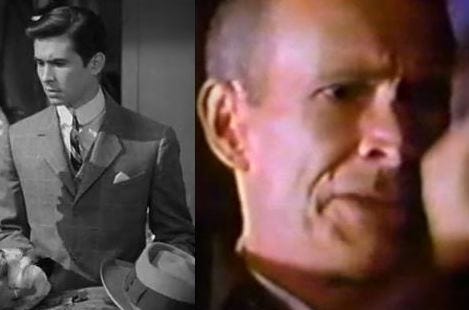
ANTHONY PERKINS
The Actress (1953) & In the Deep Woods (1992)
A singularly terrifying presence for his Norman Bates in 1960’s Psycho, Tony Perkins started out quite differently. In his first movie, which reflected a time before he was typecast as sinister, his character offers to marry a young Jean Simmons. Aw, shucks. By the end of his career, he was playing his umpteenth creeper in a TV movie, scaring the hell out of Rosanna Arquette.
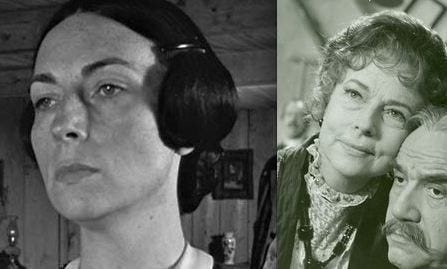
AGNES MOOREHEAD
Citizen Kane (1941) & Rex Harrison Presents Stories of Love (1974)
It’s pretty hard to top debuting in the best movie ever made, Orson Welles’s Citizen Kane in 1941 — not to mention being an indelible part of it. Moorehead’s career was Rosebudding back then, and it stayed in bloom
Among her achievements, she received three back-to-back-to-back Best Supporting Actress nominations (and deserved more), racking up a total of four Oscar nominations by the time of her death, the same year in which she appeared in a TV movie that was meant to be a pilot for a Rex Harrison-branded take on Love American Style — Rex Harrison Presents Stories of Love.
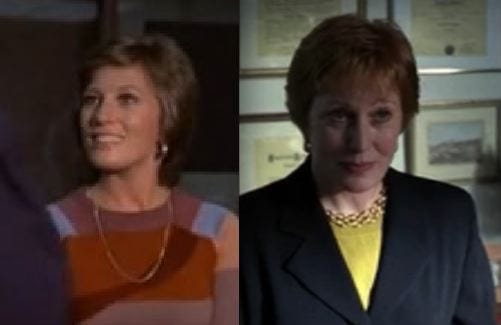
BARRIE YOUNGFELLOW
“Betrayed,” The Streets of San Francisco (1974) & “Burden,” Law & Order (1998)
This familiar face (It’s a Living, anyone?) changed her appearance a few times throughout her career, but you’d never know it by comparing her debut TV gig as Martin Sheen’s assistant on an episode of The Streets of San Francisco with her final appearance, as a doctor on Law & Order, the latter of which was a one-off that came eight years after her previous assignment.
I didn’t just include Barrie in this piece, I believe — if memory serves — I was inspired to write the whole thing while looking up what she had been up to. In the intervening years, she died at 75 in 2022.
I’ve always been intrigued by actors who seem to stop TV and films and move on to other things. One of my other faves? Caren Kaye:
Isn’t she cute as a button? I’d still recognize her anywhere.
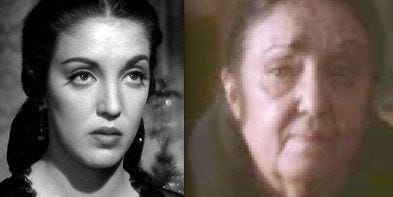
KATY JURADO
No matarás (1943) & Un Secreto de Esperanza (A Beautiful Secret) (2002)
Mexican acting legend Katy Jurado (1924-2002) started anything but humbly, igniting the screen and becoming one of the Mexican cinema’s brightest stars. She ended her nearly 60-year career, which included an Oscar nomination and a run on the ABC series a.k.a. Pablo (1984), as a wizened grandmother in a well-received film that only got made thanks to her presence.
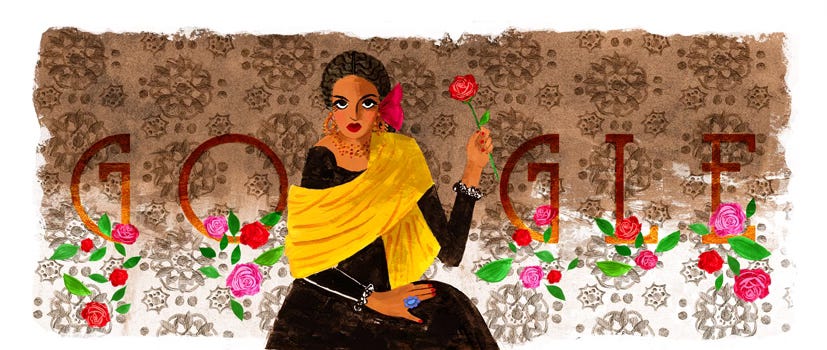
She is a fabulous way to end this list, and is one of the few entertainment figures to receive her own Google birthday doodle, with which she was honored in 2018. ⚡️